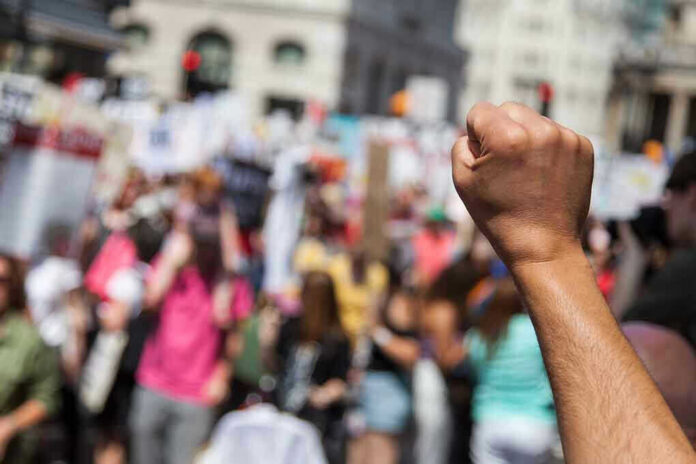
A political storm is brewing over the resurgence of anti-ICE protests, promising to reshape the landscape of America’s immigration debate.
Story Overview
- Protests and blockades against ICE operations are intensifying in response to Trump’s immigration policies.
- The “abolish ICE” movement gains renewed traction amid political campaigns.
- Violent confrontations and military deployments highlight the escalating conflict.
- The debate over ICE’s future divides the Democratic Party and energizes conservative narratives.
Protests and Political Campaigns Collide
As Donald Trump began his second term in January 2025, a series of high-profile Immigration and Customs Enforcement (ICE) raids across multiple U.S. cities ignited a nationwide wave of protests. The aggressive deportation policies have become a flashpoint, with the “abolish ICE” slogan re-emerging as a rallying cry for progressives. This movement, which previously gained momentum during Trump’s first term, has now intertwined with political campaigns as a defining issue for upcoming midterm elections.
Democratic candidates are divided on the approach to ICE, with some pushing for its abolition while others advocate for reform. This ideological battle within the party mirrors the broader societal debate on immigration enforcement. Cities like Minneapolis have become epicenters of this conflict, especially following incidents where ICE agents fatally shot individuals, sparking further unrest and calls for action.
The Role of Social Media and Public Perception
Viral videos of confrontations between ICE agents and protesters have amplified public scrutiny and fueled the polarized debate. These images, often shared widely on social media platforms, depict scenes of chaos and resistance, capturing the attention of both domestic and international audiences. The portrayal of these events through a conservative lens often frames them as radical disruptions to law enforcement, while progressive narratives highlight alleged abuses and call for systemic change.
Political figures and influencers use these platforms to galvanize support, making the issue a litmus test for Democratic candidates in the primaries. Public opinion remains split, with polls indicating a near-even divide on the abolition of ICE, reflecting the contentious nature of the discussion.
The left unveils new tactic to stop ICE | Wake Up America https://t.co/zhMQ5ujTsk via @YouTube
— Dr. Marcey Anderson (@ComMarcey) January 20, 2026
Military Involvement and Government Response
The federal government’s response to the protests has been significant, involving the deployment of National Guard troops and Marines to quell unrest in several cities. These military actions underscore the gravity of the situation and the determination of the Trump administration to maintain order and enforce immigration laws. Despite the controversy, the administration defends its actions as necessary measures to target criminals and protect national security.
The presence of armed forces in civilian areas has drawn criticism from civil rights groups and further complicated the political dynamics. As the 2026 midterms approach, the debate over ICE and immigration is poised to influence key races, with both parties leveraging the issue to mobilize their respective bases.
Long-Term Implications and Political Ramifications
The ongoing protests and political maneuvering surrounding ICE have significant implications for the future of U.S. immigration policy. In the short term, the unrest has led to disruptions in communities and businesses, particularly those with large immigrant populations. The long-term effects could include a hardening of immigration enforcement policies or, conversely, a shift toward more progressive reforms, depending on the outcomes of the elections.
Within the Democratic Party, the divide between progressives and centrists over ICE could shape the party’s platform and electoral strategy. Republicans, meanwhile, are capitalizing on the situation to portray Democrats as embracing radical policies, a narrative they hope will resonate with voters who prioritize law and order. As the debate continues, the outcome will likely have lasting repercussions for America’s approach to immigration and its political landscape.
Sources:
Wikipedia: Protests against mass deportation during the second Trump administration
Politico: Minnesota ICE midterm campaigns