
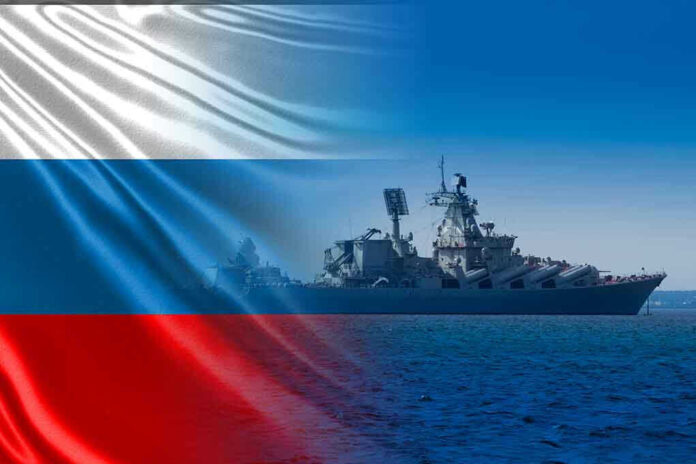
Russia’s only aircraft carrier, the Admiral Kuznetsov, is now on the verge of being scrapped after years of embarrassing breakdowns, fires, and delays, symbolizing the collapse of Moscow’s naval ambitions while the Kremlin burns taxpayer rubles on failed prestige projects.
At a Glance
- Work on Admiral Kuznetsov has been suspended, with decommissioning and scrapping now under serious consideration.
- The carrier’s modernization has been plagued by repeated disasters, including deadly fires, crane collapses, and sunken dry docks.
- Years of delays, cost overruns, and corruption have made the project a black hole for Russian defense spending.
- The ship’s demise signals Russia’s retreat from global naval power projection and exposes deep dysfunction in its military-industrial complex.
Kuznetsov: The Sinking Symbol of Russian Naval Failure
For almost three decades, the Admiral Kuznetsov was supposed to be the pride of the Russian Navy. Instead, it’s become the laughingstock of the world’s fleets, limping from one disaster to another. Launched in 1990 and commissioned in 1995, this Soviet-era relic was once meant to strike fear into the heart of NATO. Instead, it spent most of its life belching black smoke, breaking down at sea, and requiring tugboat escorts to avoid getting stranded. The only thing it projected was a cloud of failure and wasted money.
Even before its current woes, the Kuznetsov was infamous for catastrophic maintenance issues and a string of humiliating incidents. Fires, deadly accidents, and a 2016 deployment to Syria that ended with two fighter jets crashing in mere weeks—this ship has done more to advertise Russian incompetence than any Western propaganda ever could. After a major refit began in 2017, the situation only got worse: a dry dock sank beneath it, a crane collapsed onto its deck, and a fire raged for nearly 24 hours, killing two and injuring 14. As if that weren’t enough, the ship’s crew was disbanded in 2023, and it hasn’t seen service since 2017, despite billions poured into repairs.
Decades of Dysfunction and Corruption
The overhaul, originally set for completion by 2021 and then pushed to 2022 and 2025, has become a monument to Russian government mismanagement. The United Shipbuilding Corporation and the Russian Ministry of Defense have thrown good money after bad, all while technical problems and alleged embezzlement drained the project of any hope. The endless delays and spiraling costs show what happens when a regime cares more about appearances than results—much like some of the bloated, never-ending government programs we see here at home.
Let’s not forget the broader context: the war in Ukraine has sucked up whatever military resources Russia has left, leaving the Kuznetsov’s refit an afterthought. Despite big talk about nuclear-powered carriers and blue-water fleets, no new Russian carrier is on the drawing board. The current naval doctrine, once boasting about global reach, now looks like a punchline. Even retired Admiral Sergei Avakyants, a former commander, has publicly endorsed scrapping the Kuznetsov, calling it “a very expensive and ineffective naval weapon” and urging investment in unmanned systems instead. When your own admirals are begging you to throw in the towel, you know the game is up.
The Fleeting Illusion of Superpower Status
In the short term, the loss of the Kuznetsov will cripple what’s left of Russia’s ability to project air power at sea. In the long run, it’s a glaring admission that Moscow can’t keep up with China and India, who are both still building and launching new carriers. Instead, Russia is being forced to pivot to smaller amphibious assault ships and drones—hardly the stuff of superpower dreams. Scrapping the Kuznetsov might free up some funds, but it also leaves behind a mountain of sunk costs, wasted years, and the shattered morale of a once-proud navy.
The real losers here are the Russian shipyard workers and defense industry, who now face layoffs and cancelled contracts. For the Russian public—fed a steady diet of chest-thumping propaganda—watching the “flagship” rust away in port is a bitter pill. On the world stage, Russia’s naval retreat is a clear sign that it can no longer pretend to be a global force. Instead, it’s stuck dealing with the consequences of corruption, overreach, and self-inflicted wounds—something that should sound awfully familiar to anyone frustrated with government waste and failed priorities in Washington.
A Warning for All: The Cost of Chasing Illusions
The Admiral Kuznetsov’s saga is a cautionary tale for any government that values symbolism over substance. The ship’s litany of disasters—fires, breakdowns, fatal accidents—are what happens when leaders chase grandiose dreams with taxpayer money and ignore the basics of maintenance, accountability, and common sense. Whether it’s in Moscow or our own halls of power, the lesson is clear: throwing money at a failed legacy project won’t fix incompetence.
As the Kremlin prepares to quietly scrap its flagship, the rest of the world should take note. National strength isn’t measured by rusty relics or wasteful spending. It’s measured by the willingness to face reality, cut losses, and invest in what actually works. If only more politicians, here and abroad, would learn that simple lesson.