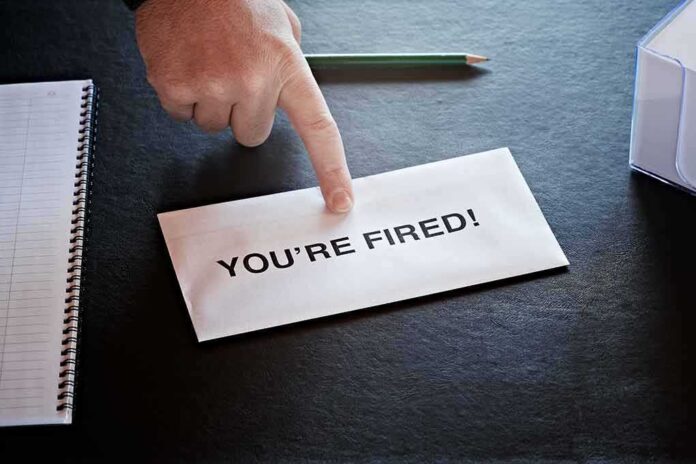
The Supreme Court has halted an order from a lower court requiring the Trump administration to reinstate thousands of fired probationary employees.
Key Insights
- The Supreme Court blocked an order requiring the Trump administration to reinstate 16,000 fired probationary federal employees.
- The Court determined that the non-profits involved in the lawsuit didn’t have the legal standing to sue, but the other plaintiffs in the case were not addressed.
- A separate lawsuit in Maryland still orders the reinstatement of many workers in 19 states and DC, with the Justice Department actively appealing.
- Justices Sotomayor and Jackson dissented, marking the third recent instance where the high court sided with Trump against lower federal judges.
Supreme Court Lifts Reinstatement Order
The Supreme Court has officially blocked a lower court order requiring the government to rehire approximately 16,000 federal employees who were fired during their probationary period. The ruling focuses on a technical but crucial legal question: whether nonprofit associations have proper standing to sue over these terminations. This decision effectively halts the reinstatement order issued by US District Judge William Alsup in California, who had determined the firings were improperly directed and bypassed legal protections established for federal workers.
The decision to halt Alsup’s March 13 injunction doesn’t end the case. The legality of the firings is still in question and has yet to be decided through court proceedings. However, the ruling keeps the Trump administration from having to keep the workers in employment as the case works its way through the courts.
The administration has consistently maintained that individual agencies directed these terminations as part of a broader effort to downsize the federal government and improve efficiency. While conservative supporters celebrated this ruling as a win for executive authority, labor unions and affected employees expressed disappointment but vowed to continue their legal battle. The scope of the firings has been substantial, with lawsuits claiming at least 24,000 probationary employees have been terminated since President Donald Trump took office.
US Supreme Court halts reinstatement of fired federal employees https://t.co/5AbWvJ0r3c
— Salem News Channel (@WatchSalemNews) April 8, 2025
Ongoing Legal Battles in Multiple Courts
Many employees remain on paid administrative leave due to a separate lawsuit in Maryland that continues to block terminations. This second case applies to federal workers of 18 different agencies in 19 states and the District of Columbia. The Justice Department is actively appealing this Maryland order, setting up another potential showdown that could make its way to the Supreme Court.
The Supreme Court’s decision revealed ideological divisions on the bench, with Justices Sonia Sotomayor and Ketanji Brown Jackson dissenting from the majority. They argued for maintaining the California judge’s reinstatement order while the legal questions were fully resolved. This marks the third recent instance where the Supreme Court has sided with the Trump administration against the determinations of federal judges, highlighting the ongoing tension between different levels of the judiciary on matters of executive authority.
Political Implications and Agency Independence
The terminations have sparked debate about the appropriate balance between executive authority and federal worker protections. Judge Alsup had criticized the firings as improperly directed from the top and claimed they bypassed legal safeguards designed to protect civil servants from political interference. The administration has countered that these decisions were made independently by agencies seeking to improve government efficiency and were conducted within the legal framework governing probationary employees, who typically have fewer protections than permanent staff.
Conservative commentators and organizations praised the Supreme Court’s decision as a necessary step toward allowing the executive branch to fulfill its mission of streamlining government operations. The ruling follows another recent victory for the administration regarding the use of the Alien Enemies Act, suggesting a pattern of the high court deferring to executive authority on certain matters. As these legal battles continue to unfold, they will likely establish important precedents about the scope of presidential power over the federal workforce and the role of the judiciary in reviewing executive actions.
Sources
- US Supreme Court halts reinstatement of fired federal employees
- Supreme Court scraps one judge’s block on Trump’s firings of probationary workers
- Supreme Court blocks order requiring Trump administration to reinstate thousands of federal workers