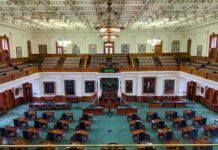
At least a dozen Democrats plan to skip President Trump’s State of the Union address this week, choosing instead to hold a counter-rally on the National Mall while the president delivers his constitutionally mandated report to Congress.
Story Snapshot
- At least 12 congressional Democrats will boycott Trump’s State of the Union address scheduled for Tuesday, February 25, 2026
- Boycotting lawmakers plan to attend an alternative “People’s State of the Union” rally on the National Mall hosted by MoveOn and MeidasTouch
- Democratic House Minority Leader plans to attend the address, stating “you don’t let anyone ever run you off of your block”
- The boycott occurs during a partial government shutdown and amid mounting controversies over immigration enforcement
- This represents an escalation from Trump’s first term, when boycotts were more sporadic and less coordinated
When Attendance Becomes a Political Statement
The State of the Union address holds constitutional significance beyond its political theater. The Constitution requires the president to periodically report to Congress on the nation’s status, transforming what could be dismissed as mere ceremony into a mandated institutional ritual. Democrats planning to skip this year’s address frame their absence as moral necessity rather than political stunt. They argue that attending would place a veneer of legitimacy on what they characterize as corruption and lawlessness defining Trump’s second term. The White House dismissed the boycott as routine Democratic obstruction, noting it’s unsurprising that opposition party members refuse to celebrate Americans who have benefited from Republican governance.
The boycott reveals a fractured Democratic strategy. While at least 12 members commit to the counter-rally, the Democratic House Minority Leader announced plans to attend the Capitol address. His reasoning cuts against the boycott narrative entirely, insisting that Trump is coming to the Democrats’ house, not the other way around. This philosophical divide raises questions about whether absence signals principled resistance or tactical retreat. Representative Ansari, who walked out of Trump’s previous congressional address, continues her protest pattern by participating in the alternative event and bringing a guest targeted by the administration’s immigration crackdown.
The National Mall Counter-Programming
The “People’s State of the Union” rally represents coordinated opposition infrastructure that didn’t exist at this scale during Trump’s first term. Liberal advocacy group MoveOn and Democratic-aligned media network MeidasTouch are co-hosting the event, which will profile leaders and individuals affected by Republican policies, including federal workers who lost their jobs. The timing creates competing narratives about America’s actual condition, with one delivered from the House chamber and another broadcast from the National Mall. This dueling reality reflects the broader polarization where even shared institutional moments fracture into partisan alternatives.
The rally occurs against a backdrop of negative headlines for the administration, including fatal shootings by federal immigration agents in Minnesota and scrutiny over the Epstein files release. Republicans view the State of the Union as an opportunity to shift focus toward economic gains and border enforcement ahead of midterm elections. The simultaneous partial government shutdown creates awkward optics for a president seeking to highlight his administration’s accomplishments. Federal workers furloughed during the shutdown will feature prominently in the Democratic counter-event, providing human faces to policy disagreements that might otherwise remain abstract.
Institutional Costs of Political Theater
Historical precedent shows Democratic boycotts of Trump events have occurred throughout both his terms, but this coordinated absence represents an escalation. During Trump’s first term, 31 House Democrats boycotted his inauguration, yet only seven boycotted his second inauguration, suggesting fatigue with symbolic resistance. The current boycott reverses that trend with renewed energy and better organization. This pattern raises legitimate questions about institutional health when constitutional rituals become optional based on political disagreement rather than shared democratic practice.
Democrats Plan to Boycott the State of the Union
https://t.co/GgW1B9f2Ht— Townhall Updates (@TownhallUpdates) February 19, 2026
The boycott strategy carries risks for both sides. Media coverage may focus more on who walked out than on policy substance, potentially serving Democratic messaging goals while simultaneously allowing Trump to dismiss substantive criticism as partisan theater. Democratic institutions traditionally derive strength from face-to-face disagreement within shared spaces. When lawmakers choose physical absence over vocal presence, they sacrifice the opportunity to directly challenge the president’s narrative in real time. The Democratic Minority Leader’s decision to attend reflects this institutional perspective, even as it contradicts his colleagues’ protest strategy. Whether this boycott represents moral clarity or missed opportunity depends entirely on whether Americans view these as normal political times requiring normal institutional responses, or extraordinary circumstances demanding extraordinary resistance.
Sources:
Democrats plan to boycott Trump’s State of the Union – Politico
Some Democrat lawmakers to boycott State of the Union speech – UPI