
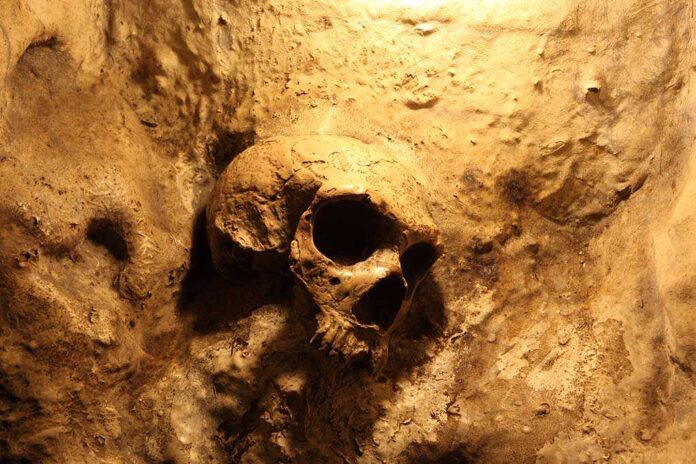
The discovery of over 100 human skulls in a Pennsylvania home has exposed a grim world of grave desecration and body parts trafficking.
Story Overview
- Over 100 human skulls found in a Pennsylvania home in connection with grave desecration.
- The man is linked to a multi-state black market network involving Harvard Medical School.
- The case highlights systemic gaps in cemetery oversight and body donation programs.
- The macabre discovery raises questions about public trust in medical institutions.
The Discovery and Initial Shock
Law enforcement in Pennsylvania uncovered a macabre scene in 2023 when they raided the home of a man accused of grave robbing and trafficking in human remains. The discovery of over 100 skulls, along with other bones and body parts, shocked the nation. These remains were allegedly stolen from cemeteries and purchased through a black market network involving several states, including Massachusetts and Arkansas.
The accused, whose residence became an unintentional museum of human remains, faces charges of abuse of a corpse, receiving stolen property, and other offenses. The case has unveiled a complex network where human body parts were trafficked, raising alarms about the oversight of cemetery operations and body donation programs.
Unraveling the Network
The investigation revealed a multi-state trafficking network that included individuals from funeral homes and medical institutions. This network allegedly stole and sold cadavers donated for medical research, tying the Pennsylvania man to a broader conspiracy involving Harvard Medical School’s Anatomical Gift Program. The scandal has highlighted significant lapses in how institutions track and safeguard human remains.
Federal authorities continue to unearth the depths of this network, which not only involves grave robbing but also the diversion of bodies meant for scientific study. The case has intensified discussions on the need for stricter regulations and better tracking systems for both cemeteries and body donation programs.
Historical Context and Legal Implications
Pennsylvania law specifically addresses the desecration of graves and the sale of human remains, underlining the outrage such acts cause to families and communities. The long history of grave robbing in the U.S. dates back to the 18th and 19th centuries, prompting the development of anatomy acts and body donation laws intended to curb such illicit activities.
Despite these laws, a gray market for human bones persists, often exploiting gaps in state regulations. This case underscores the need for robust legal frameworks to govern the handling of human remains, especially in light of the challenges posed by online marketplaces where such items are traded.
The Broader Impact and Future Implications
The scandal has not only legal and regulatory ramifications but also profound impacts on public trust in medical and academic institutions. Harvard Medical School, at the center of the controversy, has been pushed to review and enhance its procedures for securing donated bodies. The case has sparked calls for uniform standards to ensure the respectful handling of human remains.
Communities across Pennsylvania and beyond now face the daunting task of restoring confidence in the systems that honor and protect the deceased. The need for better surveillance and protection of historic and rural cemeteries has become a pressing issue, as these sites remain vulnerable to vandalism and theft.
Sources:
Justia: Pennsylvania Title 18 Chapter 33 Section 3307
RGS Law: Understanding Pennsylvania’s Criminal Mischief and Vandalism Laws
Pennsylvania General Assembly: Title 9
Rural Pennsylvania: Historic and Archaeological Human Remains 2021