A 40-second video, police interviews, and a warrant ended with handcuffs for a man who backhanded a political volunteer at a New Hampshire polling place.
Story Snapshot
- Police charged 70-year-old Stephen Redic with simple assault and disorderly conduct after a polling-place clash.
- Video shared online shows a heated exchange and a backhand across the volunteer’s face, police said.
- The confrontation happened outside a Laconia elementary school on Election Day around 3 p.m..
- Redic turned himself in the next day and was set for a December arraignment, according to reports.
What Happened Outside The Polls
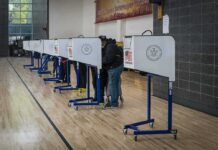
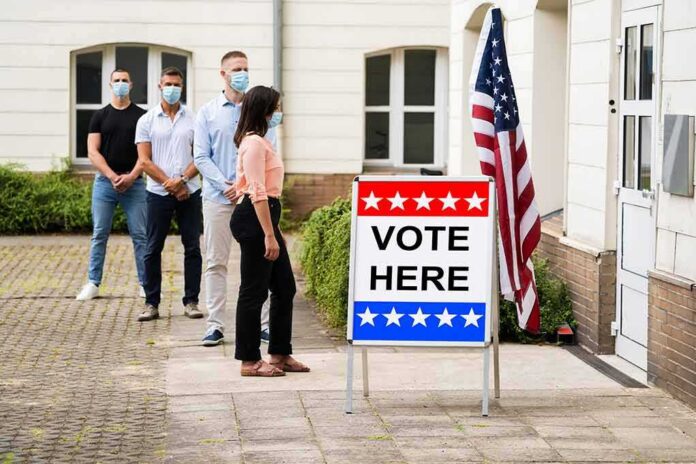
Laconia police said a man struck a Turning Point volunteer during an argument outside Woodland Heights Elementary School, the Ward 5 polling site, on November 3, 2026, shortly before 3 p.m. Officers reviewed video, interviewed witnesses, and identified the suspect as Stephen Redic, age 70. They obtained a warrant, and Redic turned himself in on November 4. Prosecutors charged him with misdemeanor simple assault and violation-level disorderly conduct. An arraignment was scheduled for December 10 in Belknap County District Court, according to media reports.
A short clip that Turning Point posted shows the argument, a middle-finger gesture, and a backhand across the volunteer’s face, according to contemporaneous descriptions. Local outlets reported the volunteer stood near a Turning Point table outside the school. The location matters, because campaigns can table outside the legal boundary while voters pass by on public sidewalks. The video’s clarity and the specific polling-place setting drew quick attention, and police moved to confirm identities and sequence through interviews and the recording.
The Charges And The Evidence Cited
Simple assault in New Hampshire generally covers knowingly or recklessly causing unprivileged physical contact. The described video and witness accounts supported a probable-cause finding for a misdemeanor charge. Disorderly conduct often addresses public disruptions that cross a line into unlawful behavior. Police and news reports said Redic faced both counts and surrendered without incident. One local station reported that Redic acknowledged his actions were inexcusable and apologized, while saying the video shows only part of the story, a common refrain after viral clips accelerate a case.
Reports described the volunteer as a Turning Point Action or Turning Point USA member and, in some accounts, as a teenager. Labels varied across outlets, which happens when a victim is not publicly named and details flow through police summaries or organizational spokespeople. What does not vary are the core facts that police cite: a face-to-face exchange, an obscene gesture, and a backhand to the face, all occurring at a polling site during active voting hours. That sequence tends to support an inference of intentional contact rather than an accidental brush.
Why This Small Case Became Big News
Polling places draw passion, and passion without guardrails ends in handcuffs. Smartphone video now turns these moments into instant headlines. The American Bar Association has noted how social media evidence can drive police action, shape charging, and harden public views before a judge hears a word. Prosecutors lean on clips; defense lawyers must explain context fast or risk losing the narrative before court even convenes. This case followed that modern script almost beat for beat.
Americans still reject political violence across party lines, yet high-intensity campaign seasons push tempers to the edge. Research from a communications study at the University of Pennsylvania found that most people do not support anti-democratic behavior, even when leaders flirt with it. That gap between belief and behavior underscores a simple civic rule that conservatives and common-sense voters share: you can argue hard, but you cannot hit people at the polls. That boundary keeps elections civil and legitimate.
What Comes Next In Laconia
The path ahead is routine but important. The court calendar drives the next steps: arraignment, discovery, any plea talks, or trial. The state will rely on the video, witness testimony, and police reports. The defense may stress context and words said before the strike. None of that changes a bedrock standard: campaigns and citizens have a right to advocate peaceably on public ground. When someone crosses into force, the law responds, as it did here with swift identification, a warrant, and charges on the books.
Sources:
twitchy.com, unionleader.com, wmur.com, nbcboston.com, bostonglobe.com, thenerdstash.com, asc.upenn.edu
© integritytimes.com 2026. All rights reserved.