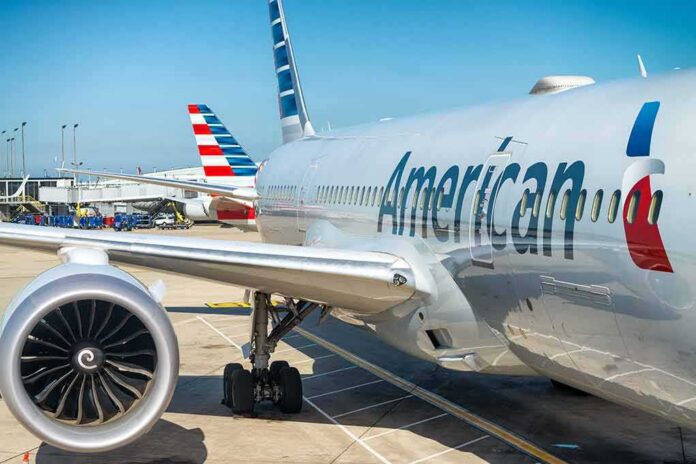
Flames flashed from an American Airlines jet engine after a bird strike near Myrtle Beach, but the flight still came back and landed safely.
Story Snapshot
- The aircraft struck birds shortly after takeoff from Myrtle Beach, South Carolina, while heading to Charlotte.
- Passengers and crew returned safely, and no injuries were reported.
- American Airlines took the plane out of service for inspection.
- The first public reports focused on flames and smoke, but the outcome was a controlled return, not a crash.
What Happened Over Myrtle Beach
American Airlines Flight 1760 took off from Myrtle Beach International Airport on Monday morning and soon reported trouble after hitting birds. Video and witness accounts described flames or sparks from the left engine, while nearby radio traffic also mentioned smoke and bird debris on the runway. The aircraft turned back, returned to Myrtle Beach, and landed safely.
Airport officials said no one was hurt, and the plane taxied to the gate under its own power. American Airlines said the aircraft was removed from service so maintenance could inspect it. That matters because the early visuals looked dramatic, but the actual outcome was a routine safety response after a wildlife strike.
Why Bird Strikes Get So Much Attention
Bird strikes are a known aviation hazard, and they often produce exactly this kind of response: a quick return, an inspection, and a short public statement while engineers check the aircraft. The Federal Aviation Administration said it would investigate the incident, which is standard when a commercial flight reports a bird strike during departure.
The key point is that a bird strike can look frightening without becoming catastrophic. That is what makes these events so hard to read in real time. A loud bang, smoke, or even flames can grab attention fast, yet the safest result is often the one that happened here: the crew keeps control, turns around, and lands the jet before the damage can grow worse.
What the Public Record Still Does Not Show
The public record does not yet explain the exact engine damage, if any, beyond the need for inspection. Reports mentioned smoke, flames, or sparks, but the early statements did not fully settle which visual effect matched the aircraft’s condition. That is common in the first hours after an aviation incident, when airlines focus on safety updates rather than technical detail.
For now, the safest reading is straightforward. A Charlotte-bound American Airlines jet hit birds after takeoff, showed signs of engine trouble, and returned safely to Myrtle Beach. Passengers got off normally, the aircraft went to maintenance, and federal investigators were notified.
🌐 Flash News: American Airlines Jet Lands Safely After Engine Bird Strike
Myrtle Beach, South Carolina – An American Airlines Boeing 737 was forced to make an emergency return and landed safely after suffering a severe bird strike moments into its departure from Myrtle Beach,… https://t.co/FJjDq7L6xU— The World Correspondent (@TheWorldCorresp) August 11, 2026
That sequence is why the story is memorable: it delivered a frightening image, but the ending was measured, controlled, and safe.
Sources:
facebook.com, abcnews.com, cnn.com
© integritytimes.com 2026. All rights reserved.