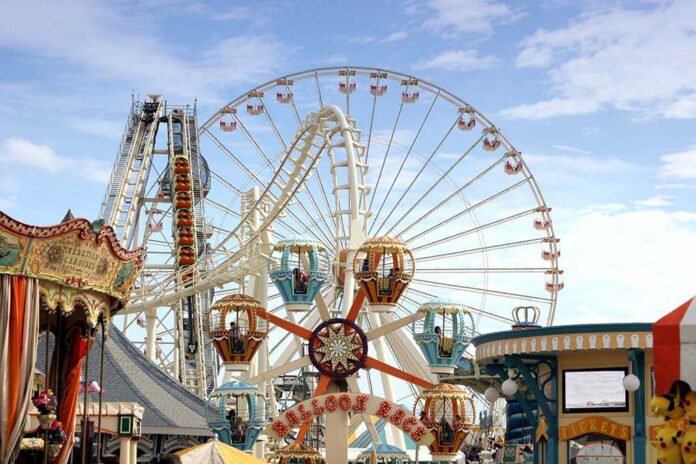
Pennsylvania’s missing spot at Trump’s Great American State Fair is not a small scheduling snag; it is the clearest sign that the event has become a loyalty test.
Quick Take
- Several states have already declined to send official delegations, and Pennsylvania joined that group after weeks of uncertainty.[1][2][3]
- Pennsylvania senators Dave McCormick and John Fetterman stepped in with state organizations and businesses to represent the Commonwealth.[10][12]
- Officials tied the no-show to high taxpayer costs and trouble finding businesses willing to attach themselves to a Trump-run event.[5][6]
- The fair still promises all 50 states, but the fight over who counts as “represented” is now the story.[1][2]
Why Pennsylvania Backed Away
Pennsylvania’s decision did not come from a lack of notice. State officials had been weighing the fair for weeks before finally declining to participate.[1][3] The reason given was plain enough: the cost to taxpayers was too high, and the state could not secure companies willing to sponsor the booth.[5][6] That is the kind of answer that cuts through political spin. It says the state saw more risk than reward in putting its name on the event.
The broader pattern matters. CNN reported that other states passed on the fair because of financial concerns and worries about its partisan tone.[2] The event was sold as a celebration of the nation’s 250th birthday, with all states and territories invited.[1][2] But once a national pageant starts to feel like a political rally, some state leaders stop seeing it as a civic duty and start seeing it as a trap.
How Pennsylvania Kept a Foot in the Door
That vacuum did not stay empty for long. Senators Dave McCormick and John Fetterman announced a partnership with Pennsylvania organizations to represent the state at the fair.[10] Local 21 News reported that Pennsylvania businesses would join that effort, filling the gap left by the governor’s boycott.[10][12] In other words, the Commonwealth did not vanish. It split into two messages: one from state government, and one from elected senators and private supporters.
This matters because the fight is not only about who shows up. It is about who gets to define Pennsylvania in public. A state can boycott an event and still leave behind a political opening for other voices to claim the stage. That is what happened here. The senators and companies did not reverse the governor’s decision. They simply made sure the state was not absent in practice, even if it was absent in name.
The Fair’s Bigger Image Problem
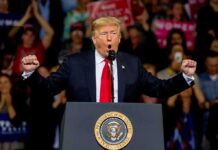
The fair has also been shadowed by claims that have taken on a life of their own. Reports said several musical acts withdrew after realizing the event was Trump-centered, and other coverage described large crowd exits during Trump’s speech.[1][2] Yahoo News also reported that Trump’s claim of 45,000 attendees was false and that the actual crowd was nowhere near that number.[2] Those details gave critics a simple story line: too political, too thin, too easy to mock.
Trump’s State Fair Faces Fresh Embarrassment!
Amid the Sparse Attendance, Empty Spaces & just Two Rides at Trump's Long-Promised "Great American State Fair," Some Attendees Managed to Make an Interesting Discovery! But It Likely Won't Please Trump! https://t.co/vTs28OD1VT pic.twitter.com/FqkJIIqfF5— D. Lesser (@HarleyGal54) June 28, 2026
Supporters pushed back with a different picture. The Washington event page lists the fair as free, and Fox News described “thousands” celebrating America 250 in Washington.[3][9] That does not settle the crowd question, but it shows why the argument keeps moving. One side points to withdrawals, walkouts, and weak turnout. The other side points to patriotic branding and public celebration. The fair now lives in that gap between claim and proof.
What the Pennsylvania Fight Reveals
Pennsylvania’s case shows how modern boycotts work. They rarely erase an event. They change the frame around it. Research on political consumer behavior finds that boycotts and buycotts are common tools of partisan signaling, though they often struggle to produce direct policy change.[19][24] That fits this dispute well. The boycott did not stop the fair from opening, but it did force the event to answer a harder question: if states refuse to join, what kind of national celebration is it really?
The answer may be less about the fair itself and more about the age it reflects. Public events now get judged like brands. A state weighs cost, optics, and whether private partners will stand beside it. Pennsylvania’s senators and businesses chose to stay in the room. The governor chose to leave. Both moves tell the same story from opposite sides: in today’s politics, even a fair can become a test of who still wants to be seen with whom.
Sources:
[1] Web – 10 States Boycott the Great American State Fair, But PA Senators and …
[2] Web – ‘Packed to the brim’: Trump says 45K guests attend Great … – WCIV
[3] Web – Trump scrambles to exaggerate pitiful crowd size at Great American …
[5] Web – What we know about Trump’s Great American State Fair | CNN Politics
[6] Web – The opening day of Trump’s Great American State Fair went exactly …
[9] Web – The Great American State Fair is off to an incredible start! Freedom …
[10] Web – Thousands celebrate America 250 at Great American State Fair in DC
[12] Web – PA officially to not participate in the Great American State Fair – …
[19] Web – [PDF] A CASE FOR THE POLITICAL BOYCOTT – West Virginia Law Review
[24] Web – Boycotts in America: A history of political and social protest
© integritytimes.com 2026. All rights reserved.