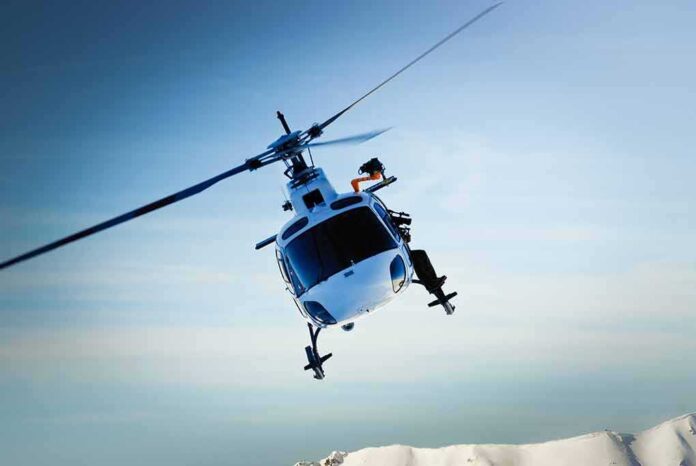
Two longtime friends who shared a passion for flying died when their helicopters collided mid-air over New Jersey woods, turning what should have been routine sightseeing flights into a tragedy that highlights the deadly risks lurking in uncontrolled airspace.
Story Overview
- Sean Johnson, 36, and Michael Landgraf, 50, were experienced pilots and high school friends flying separate Robinson R44 helicopters
- The December 22 collision occurred in marginal weather conditions over Washington Township, Bergen County
- Johnson died instantly while Landgraf survived five days in critical condition before succumbing to his injuries
- Both pilots were operating in uncontrolled airspace where no air traffic control separation services exist
- The NTSB investigation focuses on see-and-avoid failures in poor visibility conditions
When Friends Become Statistics
Sean Johnson and Michael Landgraf had been flying together since the 2000s, sharing a brotherhood forged in aviation fuel and weekend adventures. Their December 22 flights departed from Teterboro Airport on similar northbound routes over Bergen County’s wooded terrain. Neither pilot could have imagined that their shared passion would become their final bond when their aircraft met at 1,200 feet above Lake Treservoir.
The collision occurred during marginal visual flight rules conditions, with ceilings at 1,500 feet and visibility reduced to 3-5 miles. Both pilots were operating legally under VFR but flying in conditions that challenged the fundamental aviation principle of see-and-avoid. The wooded area where they crashed sits in uncontrolled Class G airspace, where pilots must maintain their own separation without air traffic control guidance.
The Deadly Dance of Uncontrolled Airspace
Washington Township represents everything beautiful and dangerous about recreational flying. The scenic area attracts dozens of sightseeing flights weekly, creating invisible highways in the sky where experienced pilots navigate by landmarks and instinct. When visibility drops and multiple aircraft share the same routes, that freedom becomes a gamble with physics and fate.
Robinson R44 helicopters, while popular for training and tours, carry a sobering safety record. NTSB data reveals that 20 percent of R44 accidents involve loss of control or mid-air events. The aircraft lacks sophisticated traffic collision avoidance systems found in larger helicopters, relying instead on pilot vigilance and radio communication that becomes ineffective when pilots cannot see each other approaching.
The Price of Passion
Both Johnson, a real estate agent from Wayne, and Landgraf, an IT consultant from Mahwah, flew as certified private pilots with over 1,000 hours of experience each. They represented the backbone of general aviation: weekend warriors who found freedom and friendship above the crowded landscape below. Their deaths underscore how experience cannot always compensate for environmental factors and systemic limitations in aircraft separation.
The FAA temporarily grounded similar VFR operations in the area, affecting approximately 50 local sightseeing operators and causing an estimated $500,000 in weekly revenue losses. This response highlights the broader implications when recreational flying intersects with public safety concerns and regulatory oversight.
Sources:
Industry expert commentary from Aviation Week and AOPA publications